Kenya wins on price and ease. Tanzania wins on scale and wilderness. That is the honest short answer to the Kenya vs Tanzania safari question. It only holds if your travel style, trip length, and budget line up with one side over the other. Neither country is the objectively better safari destination. The feel of a Kenya vs Tanzania safari is genuinely different. Both countries share the same Serengeti-Mara ecosystem and both offer the Big Five. But the experience around each sighting is not the same.
We operate safaris in both Kenya and Tanzania. We see what clients respond to. We hear what surprises them. We know what they wish they had understood before choosing. Kenya clients come back talking about the sheer volume of sightings in the Mara. Tanzania clients come back talking about the sense of wilderness, the silence, the space. Both groups are right. This guide lays out every factor that matters so you can make the call that fits your trip.
Checkout the best selling: Masai Mara Packages
Wildlife: What You’ll See on a Kenya vs Tanzania Safari
The real question isn’t which country has more animals. It’s how you experience what’s there. On a Kenya vs Tanzania safari, both countries are Big Five destinations sitting on the same Serengeti-Mara ecosystem. Lions, leopards, elephants, buffalo, and rhino live in both. What changes is the density, the scale, and the feel around each sighting.
Wildlife in Kenya’s Masai Mara
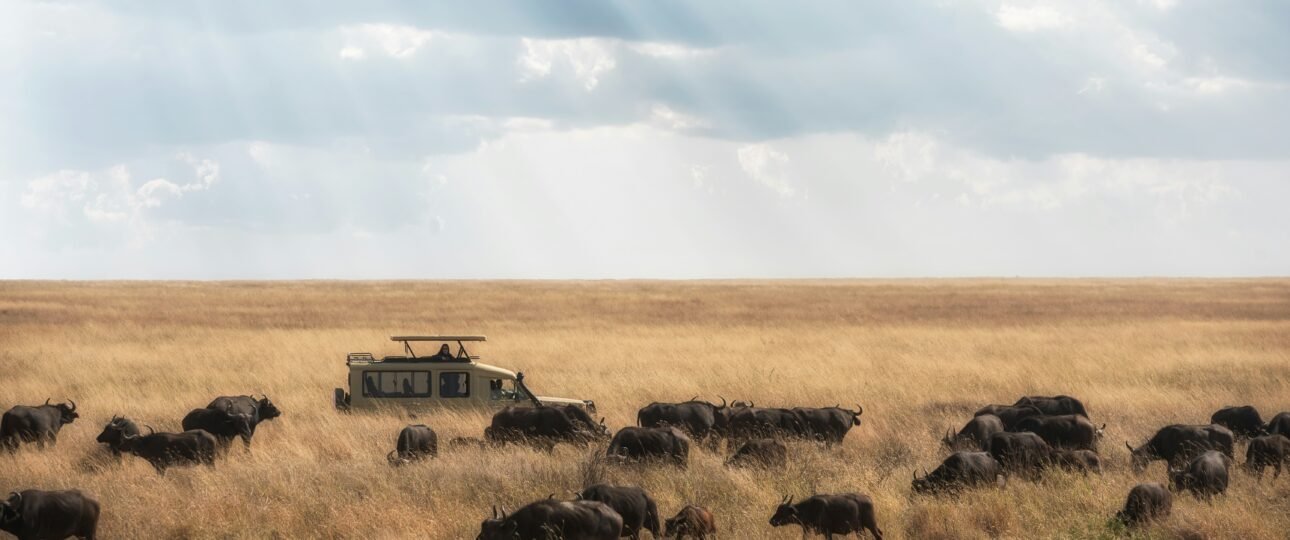
The Masai Mara carries the highest predator density on earth. Lions here don’t hide. You drive out in the morning and they’re in the open, often within the first hour. Cheetahs hunt across short grass plains that give you clear sightlines photographers wait years to find. Leopards move along riverine trees near the Mara River in numbers most parks don’t match.
Amboseli adds something else. Elephant herds of several hundred animals cross open ground with Kilimanjaro rising behind them. That view does not exist anywhere else on the continent. Further north, Samburu holds five species you won’t find south of the equator. The Grevy’s zebra, reticulated giraffe, beisa oryx, Somali ostrich, and gerenuk live here and almost nowhere else. Most tourists never see them. That’s a shame. Want 50 wildlife photos in five days? The Mara delivers that without much effort.
Wildlife in Tanzania’s Northern Circuit
Tanzania gives you room to breathe. The Serengeti alone covers close to 15,000 square kilometers. That is bigger than every major Kenyan reserve added together. Scale means wildlife spreads across more habitats. It also means fewer vehicles at any single sighting.
The Ngorongoro Crater is in a category of its own. A collapsed volcanic caldera holds all Big Five within a single enclosed space, year-round, without migration. You descend the crater rim and the wildlife is simply there. Tarangire draws elephant herds of 300 or more. Ancient baobab trees fill the landscape. Even a phone photo looks like a painting. Tanzania also has the rhino advantage. Ngorongoro offers reliable rhino sightings at closer range than most spots in Kenya. Tanzania doesn’t just show you wildlife. It makes you feel like you wandered into a system that doesn’t know you’re there.
The Great Migration: When Does the Timing Change Everything?
Most people picture one river. The Migration is far bigger than that. About 1.5 million wildebeest and 250,000 zebra move in a loop between Tanzania and Kenya all year. There is no start. There is no end. The herds follow the rains and the grass. When planning a Kenya vs Tanzania safari around the Migration, timing matters more than the country. What most people have seen in photos is the Mara River crossing. That is just one chapter of a much longer story.
Here is the full yearly movement:
- December to March: Southern Serengeti, Tanzania. Calving season. About 500,000 calves born on the short grass plains. Predator action is intense. Tourist numbers are far below peak.
- April to May: Central Serengeti, Tanzania. Herds push north slowly. Green season pricing means good camps at lower rates.
- June to July: Western Corridor and Grumeti River, Tanzania. The first river crossings begin. Crocodiles wait. Herds push hard toward Kenya.
- August to October: Masai Mara, Kenya. The famous Mara River crossings. This is the footage most people have seen.
- November: Northern Serengeti, Tanzania. Herds turn south. Short rains begin. Camps go quiet again.
Tanzania holds the Migration for roughly nine to ten months of the year. Kenya gets it for two to three. That is the key fact most comparison articles bury. If the Migration is the main reason for your trip, Tanzania gives you a much wider booking window.
The calving season is the part people overlook most. Between January and March, around 500,000 wildebeest calves hit the ground in the southern Serengeti. Predators circle constantly. Cheetahs, lions, hyenas, and wild dogs all move through. It is a wildlife event unlike anything else on the continent. And it happens with a fraction of the tourist numbers that August in the Mara brings.
If you want the Mara River crossings specifically, Kenya in August through October is the place for that. Wildebeest leap into crocodile water in waves. Nothing else looks like it. We run dedicated migration safaris for both moments. A 5D/4N Ultimate Masai Mara Experience starts from $950 per person. Our Tanzania migration itineraries covering the Serengeti and Ngorongoro start from $1,430 per person for four days.
Also know more about: Top 5 Wildlife Safaris in Kenya
Safari Parks: Masai Mara vs Serengeti and Beyond
First-timers often ask about the parks before anything else. That makes sense. The parks are what you picture when you think about a Kenya safari vs Tanzania safari. But where you stay inside each country matters just as much as which country you pick. National reserve or private conservancy is a different decision with different results.
Kenya’s Safari Parks and Conservancies
You can land in Nairobi in the morning and be on a game drive by 4pm. That’s the Masai Mara‘s clearest advantage. A 45-minute charter flight from Wilson Airport lands you in the Mara by afternoon. Same day you arrive, you’re in the bush. No multi-day drives. No long bush flights across remote country.
What most visitors miss when they book a Kenya safari is the conservancy system. Private conservancies border the national reserve on three sides. Inside those conservancies, lodges cap vehicle numbers at sightings. Off-road driving is permitted. Night game drives run regularly. Guided walks through the bush go out each morning. None of those things are allowed inside the national reserve itself. Book the cheapest Mara camp and you miss all of it. That is a real difference, not a marketing point. Amboseli and Samburu are worth your time if the Mara isn’t calling you. Both offer scenery and species the Mara doesn’t have.
Tanzania’s Northern Circuit and Remote Parks
Tanzania’s northern circuit works as a route, not just a list of parks. Most itineraries run from Arusha through Tarangire, then Ngorongoro, then into the Serengeti. Each section feels different. Tarangire is dry and open with huge elephant herds. Ngorongoro drops you into a crater unlike anything else. The Serengeti gets dramatically more wild the further west and south you push.
For safari veterans who want to go where almost no other tourists go, Tanzania’s southern parks are the answer. Ruaha National Park holds some of the largest lion prides in Africa. Nyerere National Park, also called Selous, is the biggest game reserve on the continent. Wild dogs live here in high numbers. You can spend a full day driving and not see another vehicle. Not everyone wants that level of quiet. But for those who do, nothing in Kenya or northern Tanzania comes close.
Cost Comparison: Kenya Safari vs Tanzania Safari Prices
Tanzania costs about 20 to 30% more than a similar Kenya safari. There are three clear reasons. None of them are arbitrary. Understanding them helps you decide whether the premium is worth it for your specific trip.
Park fees in Tanzania are set higher than in Kenya. TANAPA, the Tanzania national parks authority, charges more per person per day than Kenya Wildlife Service. The Ngorongoro Crater adds a separate descent fee on top of standard park entry. Those costs go into every Tanzania itinerary. Even budget Tanzania trips start at a higher floor than Kenya. That is a key difference in any Kenya safari vs Tanzania safari cost comparison.
Tanzania is also a bigger country. Most itineraries beyond the northern circuit need internal bush flights. Each flight segment can run $300 to $500 per person. Kenya’s parks cluster close to Nairobi, so road transfers are practical. A five-hour drive to the Mara is the norm. That keeps ground costs down across a whole Kenya vs Tanzania trip comparison.
Kenya has more lodges and more operators competing for the same clients. That pushes prices down. Tanzania’s remote locations mean fewer options and higher running costs for each camp. Those costs pass to the guest.
Here is a rough price guide for 2026 based on our packages:
- Kenya, five days: 5D/4N Ultimate Masai Mara Experience from $950 per person
- Kenya, seven days: 7D/6N Kenya Safari: Nairobi, Masai Mara, Naivasha, Amboseli from $1,838 per person
- Tanzania, four days: Tarangire, Serengeti and Ngorongoro from $1,430 per person (six sharing)
- Tanzania, five days: Ngorongoro and Serengeti from $2,078 per person
The Tanzania premium buys you real things. Less-crowded parks. The Ngorongoro Crater, which has no rival anywhere in Kenya. For a deeper look at what drives costs on the Kenya side, a Kenya safari cost guide breaks it down in full. The calving season. For US visitors treating this as a once-in-a-decade trip, that extra cost often makes full sense. But the Masai Mara gives you a world-class Kenya safari at a lower price. For first-timers on a tighter budget, it is the smarter place to start.
Want a custom quote? WhatsApp or email us. We’ll match you to the right itinerary for your budget.
Crowds and the Wilderness Experience
Brochure photos never show the other 20 vehicles. That’s the one thing most safari research misses. Both Kenya and Tanzania draw millions of international visitors each year. But Tanzania’s parks are far larger, so tourists spread out across much more land. In the Serengeti it is entirely normal to have a lion sighting with no other vehicles in view. In the Masai Mara during August to October, a popular sighting can draw 10 to 20 vehicles within minutes.
Does that ruin the experience? Not for everyone. Some people take the crowds as a sign that the wildlife is right there and thick. But if space and silence matter to you, the Mara in peak season is not the right answer. Kenya’s solution is the conservancy system. Private conservancies around the Mara limit vehicle numbers, allow off-road driving, and run night drives. They cost more. But they give you the Mara’s wildlife at something closer to the Serengeti’s privacy.
So which matters more to you: maximum sightings or maximum solitude? The answer to that probably decides this whole debate. Neither choice is wrong. They are just different trips.
Beach Extensions: Zanzibar vs Kenya Coast
The bush-and-beach combo is the most common East Africa trip structure we put together. Most people want four to six days on safari followed by three to five days at the beach. Both Kenya and Tanzania give you that option. The beach you choose often depends on which country your safari ends in.
Zanzibar After a Tanzania Safari
Stone Town hits you before the beach does. The old town is a UNESCO World Heritage Site. If you want the full picture before you book, must know about Zanzibar guide that covers everything. Seven centuries of Swahili-Arab architecture fill lanes so narrow that two people can barely pass. Spice markets, carved wooden doors, and the smell of cloves at dusk hit you in layers. A short flight from Arusha or the Serengeti lands you in Zanzibar in under two hours. The beaches are white sand and clear water. Nungwi sits in the north. Kendwa and Paje line the east coast. This combination, northern circuit Tanzania safari into Zanzibar, is among our most-booked trips each year. The two halves contrast each other well. Bush first, beach second. It lands right every time.
Kenya’s Coast: Diani Beach and Lamu
Diani Beach gets skipped in most comparisons. That is a mistake. South of Mombasa, Diani has a long coral reef, clear warm water, and far fewer tourists than Zanzibar. The pace is slow. The people are warm. Lamu Island in northern Kenya is car-free. No vehicles, no traffic, no noise beyond the ocean and dhow sails. Seven centuries of Swahili culture sit in every carved door and narrow lane. Kenya’s coast gets overlooked because Zanzibar has stronger name recognition with US visitors. But the beach quality is genuinely comparable. And for someone who wants a quieter, more local feel after the Mara, Diani or Lamu is worth the choice.
Safari Activities: What You Can Actually Do
Both countries run twice-daily game drives. That part is the same everywhere. Morning drives go out at dawn and run until mid-morning. Afternoon drives leave at 3pm and follow animals through golden-hour light until dark. The difference between a basic safari and a great one is what happens beyond those drives. And that depends entirely on whether you stay inside a national park or in a private conservancy.
Here is what is available and where:
- Morning and afternoon game drives: Available at every camp and lodge in both countries
- Off-road game drives: Private conservancies only. Not permitted inside national parks in either country.
- Night game drives: Private conservancies only. National park rules ban driving after dark.
- Guided walking safaris: Private conservancies only. Walking in national parks is restricted.
- Hot air balloon safaris: Both Kenya (Masai Mara) and Tanzania (Serengeti, Tarangire). Kenya’s Mara operators have a stronger safety record.
- Maasai community visits: Most private conservancy camps in Kenya and camps near the Ngorongoro area in Tanzania
Kenya has more private conservancies than Tanzania, mostly clustered around the Mara. If going beyond game drives matters, a conservancy-based Kenya lodge gives you more options. The price point is more reachable too. Tanzania’s best conservancy-style properties sit at a higher tier and serve a more luxury-focused market.
Who Is Each Destination Best For?
This is the question that actually decides the trip. Budget, trip length, travel style, and what you most want to see are the real filters. Most comparison guides skip this section. It is the most useful thing anyone can tell you.
Choose a Kenya Safari If…
Kenya suits a traveler who wants the most from a short, focused, first-timer-friendly trip. The logistics are simpler. The parks are closer. The prices are lower.
- You have five to six days or less and want a high-volume wildlife trip
- This is your first African safari and you want a straightforward start
- Budget is a real factor. Kenya runs 20 to 30% cheaper on similar itineraries.
- You want the Mara River crossings. August to October only.
- You’re traveling with young children. Kenya has more family-ready lodge options and shorter drives between parks.
- You want off-road driving, night drives, and walking safaris without a luxury price tag
Choose a Tanzania Safari If…
Tanzania suits someone with more time and less urgency. The reward requires patience, longer distances, and a higher daily budget.
- You have seven or more days and want a truly immersive wilderness trip
- The Ngorongoro Crater is on your list. Nothing in Kenya compares to it.
- You want fewer vehicles at sightings and more space between you and other tourists
- The calving season (January to March) interests you. It is dramatic, underrated, and half the cost of peak season.
- A Zanzibar beach extension is part of your plan
- You have done a Kenya safari before and want something bigger in scale
Practical Logistics: Getting There and Getting Around
Nairobi is the bigger East Africa hub. Jomo Kenyatta International Airport handles more international routes than Kilimanjaro International Airport in Tanzania. For most US travelers, both destinations need one connection. Doha, Dubai, Amsterdam, or Addis Ababa are the common hubs. Whether you’re planning a Kenya vs Tanzania safari, both routes are well-traveled and reliable. Kenya has a slight edge in total flight options and frequency. That said, reaching Tanzania via Doha with Qatar Airways or via Addis with Ethiopian is smooth and well-traveled.
Visas require separate applications for each country. There is no single visa that covers both. Kenya’s East Africa Tourist Visa covers Kenya, Uganda, and Rwanda but does not include Tanzania. If you plan a combined trip, you will need two visa applications. Our team walks you through this at the time of booking. It is not complex, but missing it causes real problems at the border.
Getting around on a guided safari means your operator handles every transfer. That is how we run all our trips. Neither Kenya nor Tanzania is set up for self-drive safaris. Park roads range from rough to genuinely difficult. Navigation inside parks takes local knowledge and experience. Fly-in options exist in both countries for people who want to spend more time with wildlife and less time in a vehicle.
Health prep is the one thing people delay too long. Yellow fever certification is required for Tanzania entry if you are arriving from an endemic country. If you want a detailed look at the best windows to visit, check best time to visit Kenya and best time to visit Tanzania guide both cover this month by month. Malaria pills are advised for both countries. See a travel health doctor before you fly, not the week before departure. Pack DEET spray for evenings. That is not optional advice.
Our Honest Take: Which Safari Is Worth Your Money?
We’ve watched clients come back from both countries and say the same thing in different ways. Tanzania clients talk about the Serengeti at dawn with no other vehicles in sight. Or about descending into the Ngorongoro Crater and feeling like the world closed behind them. Kenya clients talk about a cheetah hunt they watched from start to finish. Or about a leopard dragging a kill up a tree ten meters from the vehicle. Both are real. Both are worth serious money.
The mistake most people make when planning a Kenya vs Tanzania safari is treating wildlife as the deciding factor. The wildlife is broadly similar. The real difference is the experience around it. Tanzania gives you space and scale. Kenya gives you density and ease. Those are two different trips for two different kinds of traveler. We don’t have a single answer that fits every person who asks us this question. What we do have is a lot of experience matching the right country to the right traveler.
We run Kenya and Tanzania safaris every week. We know what a first-timer needs versus what a repeat safari-goer is ready for. Tell us your dates, your budget, and what you most want to see. We’ll give you an honest answer. Email us or WhatsApp us to start planning.
FAQs
Which African country has the best safari?
Kenya and Tanzania are the two strongest safari destinations on the continent for most travelers. South Africa’s Kruger is strong too. But the Serengeti-Mara ecosystem in East Africa offers the world’s greatest wildlife density. And it has the only Great Migration. Between Kenya and Tanzania specifically, Tanzania has a slight edge for scale and overall wilderness. But Kenya wins for accessibility, value, and first-timer ease. The right answer depends on what you want from the trip.
What is cheaper, Kenya or Tanzania?
Kenya safari is cheaper. Our Tanzania packages start from $1,430 per person for four days. Our Kenya Masai Mara packages start from $950 for five days. The gap comes from higher Tanzania park fees, internal bush flights between remote parks, and fewer lodges competing on price. For budget-conscious travelers, Kenya is the clear starting point.
Is Kenya or Tanzania safer for tourists?
Both countries are safe for tourists with standard travel precautions. Kenya has a Level 2 advisory from the US State Department, which means exercise increased caution. The same rating applies to many popular destinations in Europe. Tanzania carries a similar advisory. Neither rating means avoid. It means stay alert and use your operator’s guidance on where to go and when
Why can’t I wear white on safari?
White stands out in the bush and can disturb wildlife during game drives. Safari guides recommend earth tones: khaki, olive, tan, and brown. White also shows dust fast, which matters on full-day drives across dry park roads. Some guides also note that biting insects are drawn to bright colors. Pack neutrals and you’ll be more comfortable and less visible to the animals.
Which is better for safari, Masai Mara or Serengeti?
Both parks sit on the same ecosystem. The border between them is a line on a map, not a line in the grass. In a Kenya safari vs Tanzania safari comparison, the Mara vs Serengeti debate is the heart of it. The Masai Mara offers denser wildlife in a smaller area, easier access from Nairobi, and the famous August to October river crossings. The Serengeti offers far more space, fewer vehicles per sighting, and the Migration for nine to ten months a year.
Is Kenya or Tanzania a better place to see the Great Migration?
Tanzania is better for the Migration overall. The herds spend nine to ten months in Tanzania and two to three in Kenya. Tanzania’s calving season (January to March) in the southern Serengeti is dramatic and far less crowded than the Mara in peak season. The Grumeti River crossings in June and July happen entirely in Tanzania. Kenya’s Mara crossings from August to October are the most photographed and the most visited.